Hi everyone,
How does everyone feel now that the presentation is over. I found it really nerve racking, despite all the work we had done I still felt unprepared.
That said, I felt I have learnt alot, particularly about the time and place of Jack the Ripper. Through that information I can imagine the hell of the poor in Victorian London, and how much life has changed for the 'Joe Bloggs' of society. Jack the Ripper caused questions to be asked then and I think reflecting on the events and their surroundings can cause us to assess life today.
An example of this - in the 1980's I worked in a geriatric hospital called St Edmunds, in Northampton. I can remember the distress of some of the people that were admitted there, either from home or from the wards of the general hospital (infact the staff used to dread telling the over 60's that they were going to St Edmunds, they used to swear that it killed them off). Why? well it used to be the old workhouse. I didn't relise at the time that most of the patients, probably all of them, remebered this. To them it was a fearful and shameful place. One that reflected your inability to look after yourself and your family. Perhaps had i known then what I known now I would have done less eye rolling and sighing.
Is it important or relevent? well if Jack the Ripper existed because of the times, the technology, the politics etc. If his existence can be tied into certain events that created a unique moment, then we may be able to stand back and review our world now and look to see which events are occurring that may create thos unique moments when apparently seperate and disparate events collide to create the 'perfect' time for an event. Good or bad, small or large, beneficial or devastating. Perhaps in recognising the cusp when all things collude to create those moments we can adjust our attitudes and our outlook to accomodate them.
If we put to much distance between subjects then the connections are not made. The sociological history of victorian is linked to the technological history, which in turn is linked to scientific history, Which I think is the point that we hoped to make. One did not happen without the other.
I gained, not just a knowledge but an understanding through this presentation...so although it was scary, the process was really useful. I hope that I can use that in the coming semester.
Thanks everyone
Polly X
Pauline
Thursday, 13 December 2007


Wednesday, 12 December 2007
Victorian education
In 1860, 20 years before the ripper murders, the government began to take interest in secondary school eduction in England and Wales.
In 1861 a Royal commission under Lord Clarendon was appointed to inquire into the opening of nine schools, classified as public schools.
This was followed on by a second commission by Lord Tauton which inquired inquired into grammar schools and secondary schools.
The two commissions were the first evidence for classical education in Victorian Britain.
Grammar schools had ceased to play any important part in the life of the country, so pupils attending these schools were not awear of the white chapel murders, due to the luck of general knowledge as part of an education system.
Despite, the luck of technology, pupils were to attend school and return to there domes or return home to house work.
The education consisted of, conventional teaching fro out of date grammar books.
Only boys were expected to attend and , any if a few boys, would get anything out of the classical education, which was all that was provided.
The highest class read aloud the begging of Latin grammar without having known the meaning, just to satisfy the founders.
The main universities at the time were, Oxford and Cambridge...
Students learnt that a degree was not only for private ambition, but also for public good.
Victorian educators advocated to pupils that, high places were reserved for the educated to fulfil the duties of leadership.
This enables students to find justification through good works, of history of Europe, philosophy and languages, which were the main literacy.
History promised to cultivate the best qualities for those who studied it, the subject recorded, that the selfish suffered and lost.
This illustrated that educated people were the borgoursie of the eighteenth century and the poor always suffered because, they were force to do labour jobs, or prostitution.
The twenty first century, saw a different approach to education, students are given a curriculum that explores all aspects of society whether it is history or sociology.
The Victorians were in small societies, that were reserved and never rejoiced or spoke of things ad quaint from society, for example murder.
Today society is bombarded with so much information that everything is worth studying.
The governmenthave introduced a video conference for students at key stage 4, between the age of 13 - 14 years old.
The conference is designed for students on the Edxcelle GCSE course work option, 'jack the ripper'.
The study consists of a study of original correspondence take from the metrotian police letter books and jack the ripper letters, held at national archives.
students are to investigate why the police didn't catch the murderer.
http://www.learnigcurve.govuk/workshops/jacktheripper.htm learn more about thr ripper conference for GCSE students.
http://www.victorianweb.org/history/education/london
additional imformation on vi ctroian education.
In 1861 a Royal commission under Lord Clarendon was appointed to inquire into the opening of nine schools, classified as public schools.
This was followed on by a second commission by Lord Tauton which inquired inquired into grammar schools and secondary schools.
The two commissions were the first evidence for classical education in Victorian Britain.
Grammar schools had ceased to play any important part in the life of the country, so pupils attending these schools were not awear of the white chapel murders, due to the luck of general knowledge as part of an education system.
Despite, the luck of technology, pupils were to attend school and return to there domes or return home to house work.
The education consisted of, conventional teaching fro out of date grammar books.
Only boys were expected to attend and , any if a few boys, would get anything out of the classical education, which was all that was provided.
The highest class read aloud the begging of Latin grammar without having known the meaning, just to satisfy the founders.
The main universities at the time were, Oxford and Cambridge...
Students learnt that a degree was not only for private ambition, but also for public good.
Victorian educators advocated to pupils that, high places were reserved for the educated to fulfil the duties of leadership.
This enables students to find justification through good works, of history of Europe, philosophy and languages, which were the main literacy.
History promised to cultivate the best qualities for those who studied it, the subject recorded, that the selfish suffered and lost.
This illustrated that educated people were the borgoursie of the eighteenth century and the poor always suffered because, they were force to do labour jobs, or prostitution.
The twenty first century, saw a different approach to education, students are given a curriculum that explores all aspects of society whether it is history or sociology.
The Victorians were in small societies, that were reserved and never rejoiced or spoke of things ad quaint from society, for example murder.
Today society is bombarded with so much information that everything is worth studying.
The governmenthave introduced a video conference for students at key stage 4, between the age of 13 - 14 years old.
The conference is designed for students on the Edxcelle GCSE course work option, 'jack the ripper'.
The study consists of a study of original correspondence take from the metrotian police letter books and jack the ripper letters, held at national archives.
students are to investigate why the police didn't catch the murderer.
http://www.learnigcurve.govuk/workshops/jacktheripper.htm learn more about thr ripper conference for GCSE students.
http://www.victorianweb.org/history/education/london
additional imformation on vi
 ctroian education.
 posted by Barbara namulondo, aka jack the rippest x
Thursday, 6 December 2007
Photography

Photography was still in its relative infancy during the investigation of the Whitechapel murders.
Although the police used photography, it was only Mary Kelly who was actually photographed at the scene of the crime. The others were photographed once their bodies had been removed to the mortuary and cleaned up.
This was likely because the other 4 women were murdered in the street and the bodies were removed quickly to prevent the preying eyes of the public - which the use of the large camera would inevitably prevent.
Patricia Cornwell states:
Mortuary photographs were made with a big wooden box camera that could shoot only directly ahead… the camera could not be pointed down or at an angle.
Without the graphic and disturbing photographic evidence of the killer’s crimes, it is unlikely the mystery of the ‘Jack the Ripper’ would continue to fascinate people today.
Photographs from 'Casebook' website: http://photos.casebook.org/index.php?cat=19
Claire
Newspapers / Press

‘Jack the Ripper’s’ murders took place at a time when there was a lot of social change and immense growth within the press industry. The number of newspapers grew from a mere 14 to 168 papers throughout the UK – contributing to the publicity of the ‘Ripper’ murders.
Even at an early stage the newspapers were carrying theories as to the identity of the killer, including doctors, slaughterers, sailors, and lunatics of every description - fuelling the sensationalism of the murders.
Some papers became more popular. For instance ‘The Star’ really took off after its coverage of the crimes.
On September 4, 1888 - 4 days after the first murder of Polly Nichols - initial press reports of a ‘Ghastly Murder’ and a man named 'Leather Apron' appeared in the press
Each day newspapers chronicled the activities of the Ripper as well as inquiry results and actions taken by the police - according to the Ripper casebook it is reported that over 291 different newspapers throughout the world carried regular updates about the Whitechapel murders.
In the book ‘Jack the Ripper and the London Press’ author Perry Curtis suggests that “journalists played on the fears of readers about law and order by dwelling on lethal violence rather than sex, offering gruesome details about knife injuries but often withholding some of the more intimate details of the pelvic mutilations.” He also considers how the Ripper news affected public perceptions of social conditions in Whitechapel.
Even the feelings of the people living in the East End, and editorials that attacked the various establishments of Society appeared for both the people of London and the whole world to read.
Popular and lengthy inquests held on the victims by Coroner Wynne Baxter fuelled the press coverage to fever pitch – making the series of murders a ‘new thing’, something that the world had never known before and this could be argued as the beginning of “sensationalist” tabloid journalism.
The press was also partly responsible for creating many myths surrounding the Ripper and firmly established him as one of the most unlikely romantic figures in history.
Press reports from casebook: www.casebook.org/press_reports
Letters from Jack
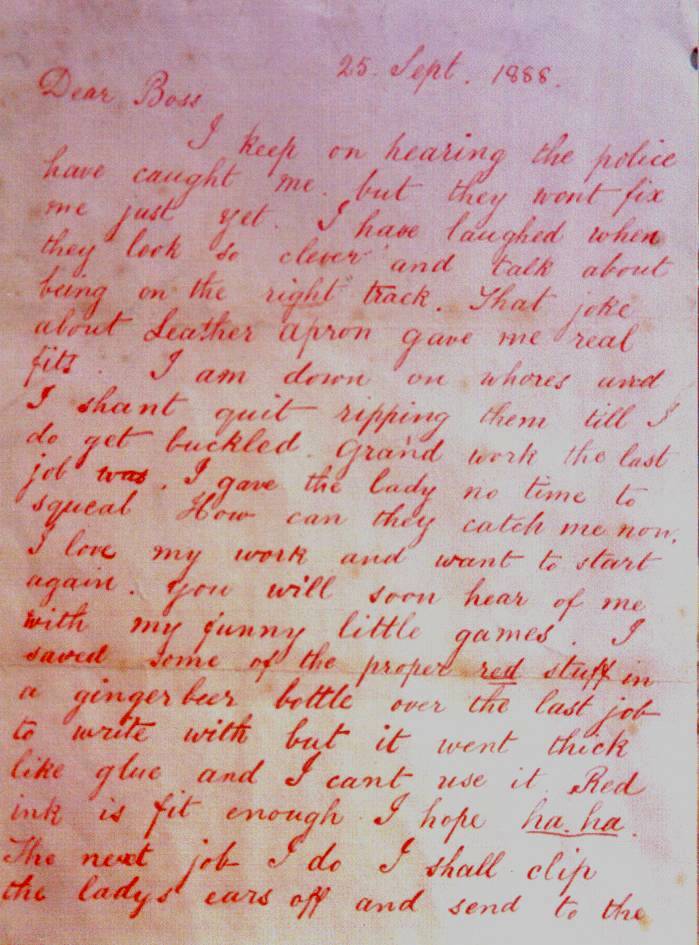
Throughout the time of the murders, police and the local press received 100s of letters.The name ‘Jack the Ripper’ was first signed in the ‘Dear Boss’ letter dated September 25 - written in red ink it was received on the 27 by the Central News agency, supposedly from the killer himself.
On October 1 1888, the morning issue of the Daily News first printed the text of the ‘Dear Boss’ letter.
The ‘Saucy Jack’ postcard marked October 1 followed. Also written in red ink and referring to both a "double event" and the first letter it was thought by police to have come from the same source.
It is possible the Whitechapel Murderer may have written them but there is no evidence and police seemed convinced they were the work of a London journalist.
Jack the Ripper letters from casebook: www.casebook.org/ripper_letters
Claire
Sunday, 2 December 2007
was jack the ripper an American doctor called Tumlety

unidentified suspect.
These were the four main recorderd suspects from the ripper case at metropolitan police history website.
In 1888, ex-Detective Chief lspector John George Littlechild. He confided his thoughts in a letter dated 23 September, 1913, to the criminological journalist and author George R Sims.
A documentry video called the 'white chapel murders', Potrayed inspecter Littlechild as a hero who revealed the name of the final and most suspected serial murderer of the east end murders.
The video speaks of the outstanding evidence linking Tumblety to the first and second murders.
He was a borgus doctor, who practiced back street abortions. He fitted, the identy of a man who decieved people through his charm and cunning manour.
For example, gold rings, clock, hat.
He was sited by his land lady to be wearing a bloody shirt and having disappeared a numerous of times after being arrested and released on bail.
The video explains, why it was okay for the police to cover up there mistakes arresting Tumblety and loosing him before there could charge him.
It is not conformed whether Tumblety was responsible for the murders, but history records him as the biggest suspect at the time.
- Kosminski, a poor Polish Jew resident in Whitechapel;
- Montague John Druitt, a 31 year old barrister and school teacher who committed suicide in December 1888;
- Michael Ostrog, a Russian-born multi-pseudonymous thief and confidence trickster, believed to be 55 years old in 1888, and detained in asylums on several occasions;
- Dr Francis J. Tumblety, 56 Years old, an American 'quack' doctor, who was arrested in November 1888 for offences of gross indecency, and fled the country later the same month, having obtained bail at a very high price.
Stuff For Presentation
Hey All,
This is what I was gonna say during the presentation, In the meeting tomorrow let me know how to shorten it as I think its to long at the moment
Slide 1
This is what I was gonna say during the presentation, In the meeting tomorrow let me know how to shorten it as I think its to long at the moment
Slide 1
- "The upper class would earn £30,000 where as the lower class would earn £25, however this was not guarenteed"
- "The Gin Palace were a haven for the lowerclass compared to their homes"
- And the contagious disease act was very gender and class bias
Slide 2
- On average proffesional men and their families would live an extra 39 years than the lower class
- "1000 less upperclass people died than the lower class in one year"
- "The age of the Ripper victims were 44,48,45,46 and 25 respectivley"
Slide 3
- "The Police force was established in 1829"
- There was a lot of dicsiplinery problems with 238 men released in 1847"
- "Springheeled Jack was a precursor to Jack the Ripper and like the Ripper the perpertrator was not discoverd"
Slide 4
- "Division H was the White Chappel Division which is where the Ripper Killings took place"
- "In 1857 there were 1803 Prostitutes in the H division"
- In 1888 there were 548 Police officers in the H division.

Catherine Eddowes
I chosen to focus on one of the Ripper victims Catherine Eddowes.This is due to the fact that Catherine Eddowes was not originally from London but Wolverhampton.This suggest that it was hard living in other parts of England not just the london's east end.Catherine was from a working class background as her father was a Tin plate worker and her mother had died quite early on.Her father George remarries whilst in london on a 'tinman' strike.He marries into a family of twelve children but the marriage is short lived as George dies soon after his new wife.
This suggests that Catherine would have been left with a lack of parental authority.Although she did have brothers and sister's they enter into Bermonsey work house in south London.This as a last result to getmoney for the basic food and shelter. So its is fair to suggest that Catherine Eddowes lived a life fighting for survival.Possibly why she ended up in London's East end.It is also fair to suggest that her death is also a result of the bad living conditions and the way in which the streets of East London were structured.Aparentlya night watch man stood in the same court yard in which Catherine Eddowes was dissected,yet failed to see her. http://www.casebook.org/victims/eddowes.html
This suggests that Catherine would have been left with a lack of parental authority.Although she did have brothers and sister's they enter into Bermonsey work house in south London.This as a last result to getmoney for the basic food and shelter. So its is fair to suggest that Catherine Eddowes lived a life fighting for survival.Possibly why she ended up in London's East end.It is also fair to suggest that her death is also a result of the bad living conditions and the way in which the streets of East London were structured.Aparentlya night watch man stood in the same court yard in which Catherine Eddowes was dissected,yet failed to see her. http://www.casebook.org/victims/eddowes.html
Friday, 30 November 2007
Will the myth of the ripper ever end?

The  ripper's identity is still unproven; however the name is still regarded with terror, by those who read into the history of London's east end.
 ripper's identity is still unproven; however the name is still regarded with terror, by those who read into the history of London's east end.
The mystery has deepened, as time goes on, because the truth is obscure, due to facts being disturbed into stories, books, plays, films and musicals.
The truth has been less accepted than fiction stories of the ripper.
The name jack is easy to explain, at the time of Victorian Britain, and the word ripper was written along with 'Jack', at the end of a letter, dated on the 25Th September, 1888.
The letter was received by Central news agency, on the 27Th September, then sent to the police on the 29Th September.
The likely hood a the letter being written by central news or someone from the police, is very likely, although, all rippoliogists are aware of the letter ever existing, and can't help to think weather the letter was from the one and only 'jack the ripper'.
A quote from the letter connected the ripper, to the murders: 'i am down on the whores and i shan't quit ripping them till i do get buckled'.
The trade name 'jack the ripper', steamed form the letter and later released to the excited public by the press at the time, thus the creating imagination in pop culture.
Many facts from the investigation of the ripper, keep the myth alive, regardless of there connection with the true killer of the white chapel murders.
It is as though, all facts have to be interpreted the same for the myth to survive all these years, for example, the top hat and clock, and the apron
An image of a well dressed, middle aged man wearing a top hat, long clock, and a doctors bag comes to mind when one speaks of the ripper in Victorian Britain.
The story of the apron began when, someone found an apron in Goulston street after the murders of Catherin Eddowes o the 30TH September.
Written on the wall above the apron was message saying, 'the Jews are the men that will not be blamed for nothing'.
The myth spread within the Jewish, polish and the British residents of London's east end. But who was the ripper....i will post the answer to this question in then next blog.
Have a look at the photos i found on the metropolitan polices history.
Thursday, 29 November 2007
The workhouse in victorian times

I have been throughthe articles I picked up on Jack at the start of the module and there is some good stuff in there.
Jack the Ripper As the Threat of Outcast London by Robert F. Haggard is interesting because it deals with some of the social stuff around the situation. It would offer some good information on people, places and environment for D's slide it's accessible on line.
I was just looking for workhouse/doss house images and found something interesting. It's not directly connected, but its an astonishing web site. Very interesting (not to mention distressing. Its well worth a look. The workhouse didn't close down until 1929 or 1930 in Wolverhampton. Well it didn't close down....it became New Cross Hospital. I would really like to use the picture at the top in the talk. I'll work it into the whole culture etc of the time.
http://www.workhouses.org.uk/index.html?Wolverhampton/Wolverhampton.shtml
The site lists lots of workhouses, and the staff and inmate names from the 1881 census.
Polly
Wednesday, 28 November 2007
Did you know?
East London was successful in the manifacturing of gun powder,rope making,bone processing to produce soap and china.
However, much of the east end was destroyed as a result of world war 2.This encouraged dispersal (people moved to different parts of London)and helped to reduce the overcrowding.
Iam yet to show you a map of East london which represents the different social classes in different areas of East London in 1888.http://www.casebook.org
However, much of the east end was destroyed as a result of world war 2.This encouraged dispersal (people moved to different parts of London)and helped to reduce the overcrowding.
Iam yet to show you a map of East london which represents the different social classes in different areas of East London in 1888.http://www.casebook.org
What was east London like in 1888
I will be covering how the envioronment was in East London and also the population in 1888.This links to the study of Jack The Ripper as it gives us an insight in to who he was,his possible back ground and why he may have commited such deviant murders.
The area East London came about due to:
The Medieval period in which it was situated east of the walled city of London.It was north of the River Thames in London.
The east end habitated imigrants and the poor,this came as a result of the clearanceof slum and down troden areas.Eastlondon was well known for disease poverty and overcrowding.This helped to increse the rate of crime.
The environmental surroundings in the East End
It was originally an area that was surroundedby farm land.This was possible before the industrial period and would suggest that ther was good soil for planting crops and keeping cattle.
It was also useful for its docks which enabled trade imports and exports and supported the Royal Navy.
But also you could imagine that this period is close to the time of the industrial revolution,so when this land was used to produce houses it saw the making of factories and industrial buildings That would cause pollution.East London was full of imigrants such as Jewish people,Irish people and Bungali.This encouraged social reforms which helped to create unions.This enhanced the Labour party and that of the Suffragges movementfor women.
East London was one of the poorest parts of London as did have bany real famous landmarks,it wasn't agreat tourest attraction.The political issues were dealt with in centural or the western part of London such as Westminister.
The area East London came about due to:
The Medieval period in which it was situated east of the walled city of London.It was north of the River Thames in London.
The east end habitated imigrants and the poor,this came as a result of the clearanceof slum and down troden areas.Eastlondon was well known for disease poverty and overcrowding.This helped to increse the rate of crime.
The environmental surroundings in the East End
It was originally an area that was surroundedby farm land.This was possible before the industrial period and would suggest that ther was good soil for planting crops and keeping cattle.
It was also useful for its docks which enabled trade imports and exports and supported the Royal Navy.
But also you could imagine that this period is close to the time of the industrial revolution,so when this land was used to produce houses it saw the making of factories and industrial buildings That would cause pollution.East London was full of imigrants such as Jewish people,Irish people and Bungali.This encouraged social reforms which helped to create unions.This enhanced the Labour party and that of the Suffragges movementfor women.
East London was one of the poorest parts of London as did have bany real famous landmarks,it wasn't agreat tourest attraction.The political issues were dealt with in centural or the western part of London such as Westminister.
Tuesday, 27 November 2007
ripper obssession
Jack ripper 's mutilating style tended to focus on the abdominal cavity and the removal of his victim's sexual organs.
The captivated sexual parts of the prostitutes was a shock to the repressed female society in the Victorian times.
Men could only project their sexual fantasies, anxieties and fears through rumours and detail from the ripper's murders.
The detectives could only enforce a rational ego to catch the murderer and restore society.
Of course, the police weren't successful because, they themselves were involved in the dramatic stories of the ripper.
The frenzy only grew, spreading to rural areas in London.
Although, people lived in a safe neighbourhood they could not forget the danger lurking around the corner.
The ripper obsession resulted in the queen's pardon for the killer to come forward in avoidance of being charged.
Society identified with the crimes so strongly, that people started to protest about how unfit the police were to catch the killer.
Of course, this started to became boring, so new rumor started to circulate the streets of east London, through news papers influences and Chinese whippers.
New speculation focus on prince Edward being involved with a lower class shop girl , so he started killing ever one that might have known about the affair in an effort to silence the black mailer.
News papers started to report on the murders in a more dramatic manner. The ripper was then named as the, 'leather apron', due to the butchering technical.
Victorians didn't advanced technology as we have in the 21st century so so a murder was more entertaining than sitting in front of a black and white television watching how one ought to be a good house wife or a successful business man.
People began to spy on there neighbours and verbal communication increased in effort to catch people as the killer.
doctors were scrutinised due to the fascinating knowledge of the ripper's dissection.
People started to commit copy cat crimes, and others confessed to the crimes to pursue the thrill of killing without committing.
The captivated sexual parts of the prostitutes was a shock to the repressed female society in the Victorian times.
Men could only project their sexual fantasies, anxieties and fears through rumours and detail from the ripper's murders.
The detectives could only enforce a rational ego to catch the murderer and restore society.
Of course, the police weren't successful because, they themselves were involved in the dramatic stories of the ripper.
The frenzy only grew, spreading to rural areas in London.
Although, people lived in a safe neighbourhood they could not forget the danger lurking around the corner.
The ripper obsession resulted in the queen's pardon for the killer to come forward in avoidance of being charged.
Society identified with the crimes so strongly, that people started to protest about how unfit the police were to catch the killer.
Of course, this started to became boring, so new rumor started to circulate the streets of east London, through news papers influences and Chinese whippers.
New speculation focus on prince Edward being involved with a lower class shop girl , so he started killing ever one that might have known about the affair in an effort to silence the black mailer.
News papers started to report on the murders in a more dramatic manner. The ripper was then named as the, 'leather apron', due to the butchering technical.
Victorians didn't advanced technology as we have in the 21st century so so a murder was more entertaining than sitting in front of a black and white television watching how one ought to be a good house wife or a successful business man.
People began to spy on there neighbours and verbal communication increased in effort to catch people as the killer.
doctors were scrutinised due to the fascinating knowledge of the ripper's dissection.
People started to commit copy cat crimes, and others confessed to the crimes to pursue the thrill of killing without committing.
- So why did the obsession of the ripper grew so much without a high media influence?
- Victorian England felt , that immoral actions were not something one should speak of, let alone practice, Jack the ripper murders were the first immoral acts, the public had to deal with.
- Speaking of the ripper actions was a direct approach to understand immoral actions
- The upper class felt they had no part in participating in immoral acts however they were intrigued.
- There views expressed that immoral actions tented to belong to the lower class, although everyone knew that people in the upper class were also indulging in immoral acts.
People took advantage of the situation, expressing unrespectable feelings, towards Jews.
Anti Semites began when rumors circulated and people started to believe the ripper was a Rabi.b The rumor encouraged English rationalism and racism.
Women began to talk about sex openly and wax Muslims made wax representations of the murders so, people have a visual fascination.
The idea of a subbasement Innocent female souls was no longer in forced because women were now met with immoral fantasies, this meant women had a visual participation in sexual violence, therefore women could voluntarily commit crimes men could commit. This introduced the idea, that the ripper could have been a women.
women had never felt such excitement before.
Monday, 26 November 2007
Slides
Heres all the Information for my slides. Sorry Im late sending it but I was working over the weekend.
Slides Information
Slide 1 – Division of Classes/ wealth
Annual Income Aristocrats - £30,000, Labourers, soldiers £25 (http://www.english.uwosh.edu/roth/VictorianEngland.htm)
Before the reform act “The rapidly growing new industrial cities are for the most part unrepresented in parliament” (http://www.historyworld.net/wrldhis/PlainTextHistories.asp?groupid=1158&HistoryID=ab07) this meant the Labourers were not represented at parliament which leads to their poor living arrangements.
“In 1832 Joseph Livesey and seven Preston workingmen signed a pledge that they would never again drink alcohol. Other groups of working men followed the example of Livesey and his friends and by 1835 the British Association for the Promotion of Temperance was formed.” (http://www.spartacus.schoolnet.co.uk/REtemperance.htm)
George Simms in “How The Poor Live” “The gin-palace is heaven to them compared to the hell of their pestilent homes” (http://www.spartacus.schoolnet.co.uk/REtemperance.htm)
The Contagious Diseases Acts were introduced in the 1860s for the compulsory examination of women believed to be common prostitutes for their hospitalization (known as lock hospitals or lock wards) should they be diagnosed suffering from a contagious disease within the meaning of the Acts (http://yourarchives.nationalarchives.gov.uk/index.php?title=The_Contagious_Diseases_Acts)
«Regulationist» policy attempted to isolate, segregate and domesticate prostitutional activity, resulting in a spatial order with clear class and gender biases. (http://www.sciencedirect.com/science?_ob=ArticleURL&_udi=B6WJN-45F4X9D-W&_user=1644469&_coverDate=07%2F31%2F2000&_rdoc=1&_fmt=&_orig=search&_sort=d&view=c&_acct=C000054077&_version=1&_urlVersion=0&_userid=1644469&md5=33e4f8a637715803b67c63a873f59c5c)
Slide 2 – Mortality Rates
101
Gentlemen, Professional Men, and their Families
45
1,258
Mechanics, Servants, Labourers, and their Families
16
· (http://www.victorianlondon.org/publications/sanitary-4.htm) The Above table shows that the money that gentlemen and professional men have lead to an average extra 39 years, as well as over 1000 people less dieing
· The poor would receive £25 annual salary (http://www.english.uwosh.edu/roth/VictorianEngland.htm) this was not a guaranteed income and would often be a temporary position, which was the case for most poor people.
· Ripper Victims – Mary Ann Walker age 44, Annie Chapman age 48, Elizabeth Stride age 45, Catherine Eddowes age 46, Mary Jane Kelly age 25. (http://www.casebook.org/)
Slide 3 – Policing
The Metropolitan Police was formed on 29th September 1829 By Sir Robert Peel.
Key to the map of whitechappel show the Large Criminal sections of the area
There were disciplinary problems in 1847 amongst their officers on the 18 divisions, with 238 men being dismissed in the year. (http://www.met.police.uk/history/timeline1829-1849.htm)
Spring-heeled jack was a precursor to Jack the Ripper as it is another case with no known perpertrator “The police investigation was inconclusive alas, official investigators concluded the assailant was a local man who must have known the area and the Alsop family very well, but while suspects were known they could not positively identify any culprits.” (http://www.blackcatpress.co.uk/Spring_Heeled_Jack_Page.htm)
Slide 4 – Divisions of the metrolpolitan police (1857)
· The Chart shows the Divisions of the Metrolpoliton Police are and the number of Brothels in them (www.victorianlondon.org). The Jack the Ripper Killings took place in Divisions H and J.
· In Divion H in 1857 there were 1803 Prostitues.
· Division H was the White chappel Division and Division J was Bethnal Green. (http://homepage.ntlworld.com/hitch/gendocs/police.html)
· Divion J came after this chart. However Bethnal Green was one of the areas surrounding White Chappel and was very much in the same state as White chappel.
· In 1988 there were 548 Police officers in the witechappel divison (Division H) and 617 Officers in the Bethnal Green Division (Division J) (http://homepage.ntlworld.com/hitch/gendocs/police.html)
Slides Information
Slide 1 – Division of Classes/ wealth
Annual Income Aristocrats - £30,000, Labourers, soldiers £25 (http://www.english.uwosh.edu/roth/VictorianEngland.htm)
Before the reform act “The rapidly growing new industrial cities are for the most part unrepresented in parliament” (http://www.historyworld.net/wrldhis/PlainTextHistories.asp?groupid=1158&HistoryID=ab07) this meant the Labourers were not represented at parliament which leads to their poor living arrangements.
“In 1832 Joseph Livesey and seven Preston workingmen signed a pledge that they would never again drink alcohol. Other groups of working men followed the example of Livesey and his friends and by 1835 the British Association for the Promotion of Temperance was formed.” (http://www.spartacus.schoolnet.co.uk/REtemperance.htm)
George Simms in “How The Poor Live” “The gin-palace is heaven to them compared to the hell of their pestilent homes” (http://www.spartacus.schoolnet.co.uk/REtemperance.htm)
The Contagious Diseases Acts were introduced in the 1860s for the compulsory examination of women believed to be common prostitutes for their hospitalization (known as lock hospitals or lock wards) should they be diagnosed suffering from a contagious disease within the meaning of the Acts (http://yourarchives.nationalarchives.gov.uk/index.php?title=The_Contagious_Diseases_Acts)
«Regulationist» policy attempted to isolate, segregate and domesticate prostitutional activity, resulting in a spatial order with clear class and gender biases. (http://www.sciencedirect.com/science?_ob=ArticleURL&_udi=B6WJN-45F4X9D-W&_user=1644469&_coverDate=07%2F31%2F2000&_rdoc=1&_fmt=&_orig=search&_sort=d&view=c&_acct=C000054077&_version=1&_urlVersion=0&_userid=1644469&md5=33e4f8a637715803b67c63a873f59c5c)
Slide 2 – Mortality Rates
101
Gentlemen, Professional Men, and their Families
45
1,258
Mechanics, Servants, Labourers, and their Families
16
· (http://www.victorianlondon.org/publications/sanitary-4.htm) The Above table shows that the money that gentlemen and professional men have lead to an average extra 39 years, as well as over 1000 people less dieing
· The poor would receive £25 annual salary (http://www.english.uwosh.edu/roth/VictorianEngland.htm) this was not a guaranteed income and would often be a temporary position, which was the case for most poor people.
· Ripper Victims – Mary Ann Walker age 44, Annie Chapman age 48, Elizabeth Stride age 45, Catherine Eddowes age 46, Mary Jane Kelly age 25. (http://www.casebook.org/)
Slide 3 – Policing
The Metropolitan Police was formed on 29th September 1829 By Sir Robert Peel.
Key to the map of whitechappel show the Large Criminal sections of the area
There were disciplinary problems in 1847 amongst their officers on the 18 divisions, with 238 men being dismissed in the year. (http://www.met.police.uk/history/timeline1829-1849.htm)
Spring-heeled jack was a precursor to Jack the Ripper as it is another case with no known perpertrator “The police investigation was inconclusive alas, official investigators concluded the assailant was a local man who must have known the area and the Alsop family very well, but while suspects were known they could not positively identify any culprits.” (http://www.blackcatpress.co.uk/Spring_Heeled_Jack_Page.htm)
Slide 4 – Divisions of the metrolpolitan police (1857)
· The Chart shows the Divisions of the Metrolpoliton Police are and the number of Brothels in them (www.victorianlondon.org). The Jack the Ripper Killings took place in Divisions H and J.
· In Divion H in 1857 there were 1803 Prostitues.
· Division H was the White chappel Division and Division J was Bethnal Green. (http://homepage.ntlworld.com/hitch/gendocs/police.html)
· Divion J came after this chart. However Bethnal Green was one of the areas surrounding White Chappel and was very much in the same state as White chappel.
· In 1988 there were 548 Police officers in the witechappel divison (Division H) and 617 Officers in the Bethnal Green Division (Division J) (http://homepage.ntlworld.com/hitch/gendocs/police.html)
Sunday, 25 November 2007
Disraeli quote
The Disraeli quote for the beginning of the talk
Two nations between whom there is no intercourse and no sympathy;who are as ignorant of each others habits' thoughts' and feelings' as if they were dwellers in different zones' or inhabitants of different panets. The rich and the poor.
Disraeli (1845) Sybil
Polly
Ripping yarns
Hi everyone.
I had originally thought about doing some handouts for people but the class list is enormous and also we don't know how many people will turn up. Next thought was "how about emailing the presentation to people so they can have it if they want to" does that seem reasonable?
I'm putting together the reference list, if anyone uses stuff that needs referencing can they email it to me please.
For the profile slide: (penultimate slide)
Title: Ripping Yarns
See you soon
Polly
I had originally thought about doing some handouts for people but the class list is enormous and also we don't know how many people will turn up. Next thought was "how about emailing the presentation to people so they can have it if they want to" does that seem reasonable?
I'm putting together the reference list, if anyone uses stuff that needs referencing can they email it to me please.
For the profile slide: (penultimate slide)
Title: Ripping Yarns
- The Usual Suspects.
- The Unusual Suspects
- Profiling The Ripper
- Ripperology
- 1788
- 1888
- 1988
See you soon
Polly
Thursday, 22 November 2007
Draft presentation
Dear All
I have emailed you all a draft of the presentation. All pages have been laid out with bullet point ideas for your notes and research.
I would like to receive any images, charts etc you wish to attach to your slides along with 4-5 main bullet point facts which you would like to show on the slide by Monday at the latest so I can design the presentation.
Your notes will be your own responsibility but it would be a good idea to attach them to the blog for everyone to see and comment on.
Slide order and speaker:
1. Introduction - Polly
2. Timeline of Events - Marcus
3. How does the timeline fit into ‘Jack the Ripper’? - Marcus
4. Environment / places - Dee
5. Population / people - Dee
6. Division of classes / wealth - Tim
7. Mortality rates - Tim
8. Policing - Tim
9. Divisions of Metropolitan Police (1857) - Tim
10. Technology – Invention of the camera - Claire
11. Technology – Newspapers/print - Claire
12. Education / literacy - Barbara
13. The myth of ‘Jack the Ripper’ - Barbara
14. Profile of JTR - Polly
15. Conclusion - Polly
Good luck and look forward to receiving your content
Claire
I have emailed you all a draft of the presentation. All pages have been laid out with bullet point ideas for your notes and research.
I would like to receive any images, charts etc you wish to attach to your slides along with 4-5 main bullet point facts which you would like to show on the slide by Monday at the latest so I can design the presentation.
Your notes will be your own responsibility but it would be a good idea to attach them to the blog for everyone to see and comment on.
Slide order and speaker:
1. Introduction - Polly
2. Timeline of Events - Marcus
3. How does the timeline fit into ‘Jack the Ripper’? - Marcus
4. Environment / places - Dee
5. Population / people - Dee
6. Division of classes / wealth - Tim
7. Mortality rates - Tim
8. Policing - Tim
9. Divisions of Metropolitan Police (1857) - Tim
10. Technology – Invention of the camera - Claire
11. Technology – Newspapers/print - Claire
12. Education / literacy - Barbara
13. The myth of ‘Jack the Ripper’ - Barbara
14. Profile of JTR - Polly
15. Conclusion - Polly
Good luck and look forward to receiving your content
Claire
Murder and Mayhem
Hi everyone.
It was a really good meeting this morning, we got loads of work done. I hope everyone is looking forward to actually doing the presentation.
Claire was thinking of using a quote from one of Sherlock Holmes books to illustrate perhaps why the whole Jack the Ripper has survived so many years....
I think its this one:
Ref: Sir Arthur Conan Doyle. A Study In Scarlet.
It sums it up quite well. We are mystified about the character, we imagine the horrific conditions, the murders etc. By the way this story was not about Jack the Ripper.
The other thing which I'm going to try and work into my conclusion is the fact that all this happened just over a hundreds years ago. This was during my Grandfather's lifetime. He was born in 1884. My Mother can remember her Mother discussing it and how it was passed by word of mouth through the family from her parents. just 3 generations.
My conclusion is going to be based on how Jack the Ripper occurred at a time of change as illustrated by the material in the presentation.
I'll use the idea that had the same murders happened a 100 years before the information wouldn't have survived. It would have been woven into folkloric style stories. Jack the Ripper was spawned from the pit of Industrialisation, and regardless of whether he was rich or poor, he was still a product of the time, place and people. The media sensationalised his activity, but to some extent the media at the time was a sensation in its own right. The ability to send news all around the world by wire, the ability of the general population to read all of these thing conspired to ensure he remained alive in peoples memories....and when the memories faded or were gone to the grave the printed word, the photographic image took over and acted as the consciousness of the people. I'm also going to suggest that if those murders happened 100 years later they would also pass out of the consciousness of people. We have so much information now that the horrors of one case are quickly replaced by the horrors of another, they are absorbed into the everyday. Also there would be a much greater chance of catching the perpetrator of heinous crimes, fingerprints, DNA, trace evidence, better photography.
To sum up the discussions we had, particularly as we weren't all around at the same time.
Reminder: Thursday 29th Nov 9-11 HLC room 129 for final tweeking of presentation
Monday 3rd October 3-5 room 128 HLC for practice. The plan is to all meet at 4pm.
Claire needs all bullet point etc that you want on the slides by Monday.
For anyone in Research Methods I've Emailed Steve to tell him we might be late, I'll let you know the outcome.
Good luck getting all your stuff together.
Polly
It was a really good meeting this morning, we got loads of work done. I hope everyone is looking forward to actually doing the presentation.
Claire was thinking of using a quote from one of Sherlock Holmes books to illustrate perhaps why the whole Jack the Ripper has survived so many years....
I think its this one:
"There is a mystery about this which stimulates the imagination; where there is no imagination there is no horror"
Ref: Sir Arthur Conan Doyle. A Study In Scarlet.
It sums it up quite well. We are mystified about the character, we imagine the horrific conditions, the murders etc. By the way this story was not about Jack the Ripper.
The other thing which I'm going to try and work into my conclusion is the fact that all this happened just over a hundreds years ago. This was during my Grandfather's lifetime. He was born in 1884. My Mother can remember her Mother discussing it and how it was passed by word of mouth through the family from her parents. just 3 generations.
My conclusion is going to be based on how Jack the Ripper occurred at a time of change as illustrated by the material in the presentation.
I'll use the idea that had the same murders happened a 100 years before the information wouldn't have survived. It would have been woven into folkloric style stories. Jack the Ripper was spawned from the pit of Industrialisation, and regardless of whether he was rich or poor, he was still a product of the time, place and people. The media sensationalised his activity, but to some extent the media at the time was a sensation in its own right. The ability to send news all around the world by wire, the ability of the general population to read all of these thing conspired to ensure he remained alive in peoples memories....and when the memories faded or were gone to the grave the printed word, the photographic image took over and acted as the consciousness of the people. I'm also going to suggest that if those murders happened 100 years later they would also pass out of the consciousness of people. We have so much information now that the horrors of one case are quickly replaced by the horrors of another, they are absorbed into the everyday. Also there would be a much greater chance of catching the perpetrator of heinous crimes, fingerprints, DNA, trace evidence, better photography.
To sum up the discussions we had, particularly as we weren't all around at the same time.
- The idea that Jack might have been well to do, aristocracy, educated, could come from a number of things.
Droit de seigneur: Although this is based 'lord's right' in medievel times and is disputed as fact, the chances are that through oral story telling traditions some notion of the aritocratic feudal system existed. A 'them' and 'us' situation within both the working class and the upper class. - It distanced the poor of London from the criminal. Rather than think that the murderer was a husband, lover, father, brother etc, it might have been easier to place the murderer outside of the known circle of aquaintances. It also highlights our own ability to act as criminal. "If Jill Bloggs could be a murderer well then so could I" style of thing.
- Strangely, that disassociation may have acted to maintain the status quo. Instead of rebelling against the conditions under which they were living, the poor carried on. Was this because they viewed the upper class etc as corrupt - morally. Hypocrisy loomed large withinVictorian Society. To some extent you have to read between the lines to find out what went on between the sheets, in the doorways and alleyways etc. Unless you delve into Victorian pornography there sex etc is eluded to in literature. Certainly writers such as Thomas Hardy were castigated for discussing illigitimacy and sex before marriage. Mary Ann Evans (who wrote as George Eliot) also sufferred social exile due to her relationship with George Henry Lewes.
- The way in which the environment contributd to J the R ability to commit murder. When we went on the walk our guide explained how one of the murders took place (Catherine Eddowes I think) in a dark courtyard. Catherine was quite badly mutilated (info is in the handouts) so it must of taken no small amount of time to do the damage. While this was happening a watchman from the factory that formed one of the wall stood in a doorway looking into the square and saw and heard nothing. Well maybe nothing unusual. It was probably too dark to see anything, coupled with fog and smog. But also, if you live in a society where sex on the streets for tuppence is commonplace, the chances are a few odd noises in a dark courtyard arn't going to catch your attention.
- We discussed the difference in annual income, which translates across to the mortality rate and average age of death.
- We also discussed the number of prostitutes as recorded by the police and the areas in which they were to be found. There are also charts that show how they were categorised.
- There is some difficulty in locating the division area of Whitechapel, but the J the R casebook website indicates that it was covered by Div H and J. Whilst we couldn't find number for J (The met have incomplete Records) The highest number of prostitutes is recorded in H Division.
- We discussed the fact that most of the victims (Mary Kelly being the exception) were in their 40's and basically coming to the end of their lives. Affected by alcohol, poorly nourished, exposed to disease and harsh living conditions they would not have lived into old age.
- We discussed some of the reform movements: Chartist, Temparence etc. Some were very harsh in their treatment of the poor and believed that they were idle etc. Often only turned to in desperation because of their restrictive practices. We also chatted about some of the Acts of Law passed.
- We talked about some of the outcomes. J the R did succeed in awakening a social consciousness about the plight of the poor. The position of women changed quite considerably in the following 40 years. Acts were bought in to protect workers and stop child labour. Slum clearance in some areas (although not always a help...often people couldn't afford the new housing) but things slowly, very slowly got better.
Reminder: Thursday 29th Nov 9-11 HLC room 129 for final tweeking of presentation
Monday 3rd October 3-5 room 128 HLC for practice. The plan is to all meet at 4pm.
Claire needs all bullet point etc that you want on the slides by Monday.
For anyone in Research Methods I've Emailed Steve to tell him we might be late, I'll let you know the outcome.
Good luck getting all your stuff together.
Polly
Sunday, 18 November 2007
Research
Hey I've done some research in preperation for the meeting tommorrow. I'll do more before the lecture on Thursday but for now here are some links.
http://www.aboutbritain.com/articles/life-in-victorian-england.asp http://answers.google.com/answers/threadview?id=444371
http://www.english.uwosh.edu/roth/VictorianEngland.htm
Its not great but its a start and ill do more after the meeting tommorrow.
Posted By Timothy Saunders
http://www.aboutbritain.com/articles/life-in-victorian-england.asp http://answers.google.com/answers/threadview?id=444371
http://www.english.uwosh.edu/roth/VictorianEngland.htm
Its not great but its a start and ill do more after the meeting tommorrow.
Posted By Timothy Saunders
Photography and it's impact on the obsession with Jack the Ripper
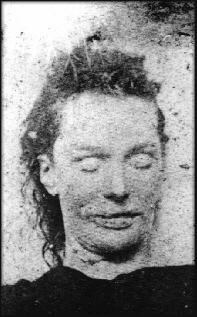
I truly believe that without the release of the morgue photographs of Jack the Ripper's killings that the obsession with the world's 'first serial killer' would not be as great, perhaps not even exist.
The horrific photographs, though in sepia/black and white and fairly unclear, still have an impact on today's viewer. They are extremely graphic, showing the immense damage he caused to his victims, even rendering a couple of them unrecognisable by mutilating their faces so badly.
In today's society it is very unlikely that photographs of this nature would be released for many years after the crime - if at all. Though there are some websites on the internet which provide this kind of imagery of bloody murder scenes. (http://www.rotters.com)
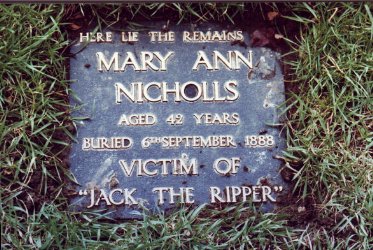
Patricia Cornwell gives information about the use of photography in the late 1800s in her book 'Portrait of a Killer: Jack the Ripper Case Closed'.
Mortuary photographs were made with a big wooden box camera that could shoot only directly ahead. Bodies the police needed to photograph had to be stood up or propped upright against the dead-house wall because the camera could not be pointed down or at an angle. Sometimes the nude dead body was hung on the wall with a hook, nail, or peg at the nape of the neck. A close inspection of the photograph of a later victim, Catherine Eddows, shows her nude body suspended, one foot barely touching the floor.
Cornwell goes onto say:
These grim and degrading photographs were for purposes of identification and were not made public.
I feel that Cornwell's book is presumptious because even though she is very qualified in her field, I personally believe it will never be proved who Jack the Ripper was - no matter who tries we will never truly know and the title of her book is wrong to think her version is correct.
History of photography
Information about the history of photography can be found on the Inventors website as follows:
http://inventors.about.com/library/weekly/aa111100a.htm
Photography timeline
1000
The first pinhole camera was invented by Alhazen (Ibn Al-Haytham), a great authority on optics in the Middle Ages. He explained why the picture was upside down.
1600s
Della Porta reinvented the pinhole camera. Apparently he was the first European to publish any information on the pinhole camera. He is often incorrectly credited with its invention.
1814
Joseph Nicéphore Niépce was the first person to take a photograph in 1814. He took the picture by setting up a machine called the camera obscura in the window of his home in France. It took eight hours for the camera to take the picture.
1835
Englishmen, Henry F. Talbot invents Calotype photography
1839
Frenchmen, Louis Daguerre and J.N. Niepce co-invent Daguerreotype photography.
1877
Eadweard Muybridge invents the first moving pictures.

1884
George Eastman patents paper-strip photographic film.
George Eastman wanted to simplify photography and make it available to everyone, not just trained photographers. In 1883, Eastman announced the invention of photographic film in rolls. Kodak the company was born in 1888 when the first Kodak camera entered the market. Pre-loaded with enough film for 100 exposures, the Kodak camera could easily be carried and handheld during its operation. After the film was exposed (all the shots taken), the whole camera was returned to the Kodak company in Rochester, New York, where the film was developed, prints were made, new photographic film was inserted, and then the camera and prints were returned to the customer.
Further information about the victims and their mortuary photographs can be found at:
http://www.casebook.org/victims
Claire
Subscribe to:
Posts (Atom)